

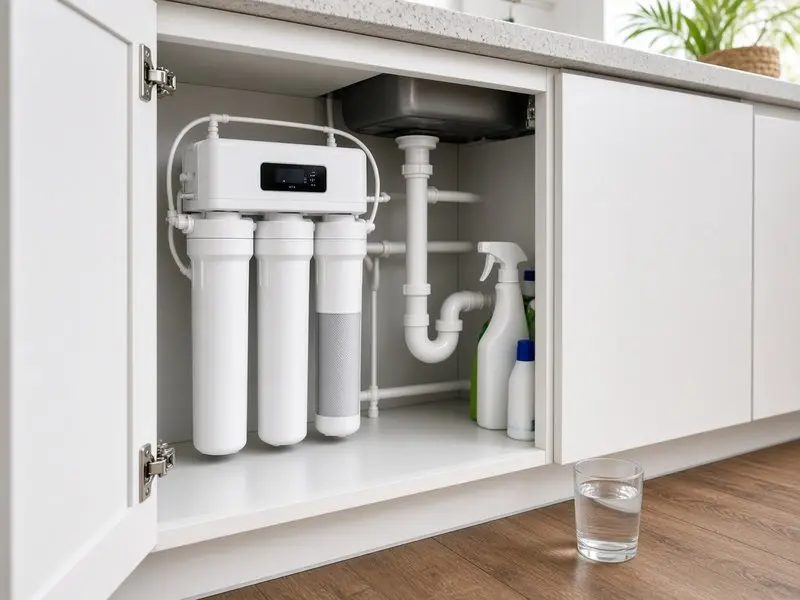
In Saint Martin, we have all lived that scene: the car boot filled with packs of water, the stairs to climb in the sun, the empty bottles piling up on the veranda… and that slightly “odd” taste when you dare to drink from the tap. The good news: there is a simpler way to drink filtered water every day, right at home. It is called a reverse osmosis system, and it fits under the sink.
At Nawak Import, 59 route de l'Espérance in Grand Case, we have two under-sink reverse osmosis systems in the water treatment aisle, from €401. Here is how it works, what it can (and cannot) do, and how to choose — with no jargon and no miracle claims.
Reverse osmosis, explained in 30 seconds
A reverse osmosis system pushes water through an ultra-fine membrane: 0.0001 micron on both of our models. The idea: the water goes through, and much of what is dissolved stays behind and goes down the drain. Before the membrane, a pre-filter stops sand, rust and sediment and reduces chlorine. After it, a final carbon filter polishes the taste.
On older reverse osmosis systems, the water produced was very pure but a little “flat”. The two models we offer add an alkaline remineralisation stage: after the membrane, the water takes back minerals such as calcium and magnesium. The result stated on the product pages: filtered water that is more pleasant to drink, for coffee, tea, ice cubes, cooking and the children's water bottles.
A small bonus: both units are tankless. Water is produced on demand, and the under-sink cabinet does not turn into a tank cupboard.
Tap water or cistern water: what you need to know
This is THE question we get asked in Grand Case. Let us be clear, because water is not something to treat approximately.
If you are connected to the mains, an under-sink reverse osmosis system is made for you. The TR-800 product page in fact states a “recommended use: treated mains water”. The system then improves the taste and reduces what remains dissolved in the water, at the drinking point.
If your house runs on a cistern, it is more delicate. Stored rainwater can contain deposits, and its quality depends on the state of the cistern, the gutters and the maintenance. A kitchen reverse osmosis system is not a whole-house potability system. The right reflex:
- have the cistern cleaned and maintained regularly;
- have the water tested if you drink it, especially with children;
- plan pre-filtration upstream if the water is heavy with sediment, to protect the membrane;
- come and talk it over with us in the shop, with your installation details: we will tell you honestly whether the system alone is enough in your case.
It is not the most “salesy” message in the world, but it is the right one. A membrane drowned in sediment wears out fast, and poorly treated water does not become safe by magic.
Our two under-sink reverse osmosis systems
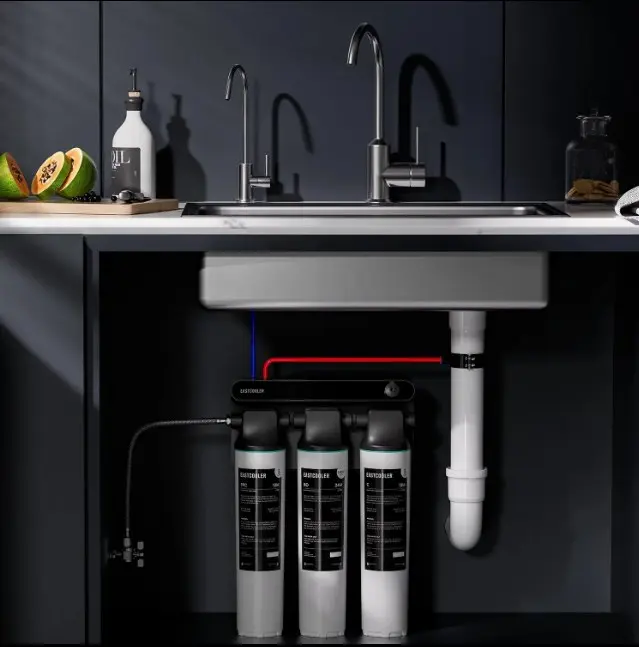
Both are currently shown as in stock on the site, with a dedicated faucet included. You keep your usual kitchen tap, and you gain a second faucet reserved for filtered water.
| Model | Listed price | Claimed flow | What the product page says |
|---|---|---|---|
| TR-800, 800 GPD | €401 | up to ~3,028 L/day | 3 stages, TDS display, 4:1 ratio, no mains socket (battery-powered), self-cleaning |
| TX600-A, 600 GPD | €443 | up to ~2,270 L/day | 3 cartridges, dual TDS display in/out, 2:1 ratio, 48 W pump |
The TR-800: the highest flow, and the easiest to fit
The TR-800, at €401, is rated at 800 GPD, or about 3,028 litres per day in theory. Its big advantage under SXM sinks: according to the product page, it runs without a mains connection, so you do not need a 110 V or 220 V socket in the cabinet. Its 4:1 ratio means about 4 litres of filtered water for 1 litre rejected. Narrow format: 360 × 127 × 497 mm. The display shows the TDS (dissolved solids, in ppm) and the status of each filter.
The TX600-A: for those who like to stay in control
The TX600-A, at €443, produces up to about 2,270 litres per day. Its geek-friendly extra: a dual TDS display, at the inlet and the outlet. You see in real time the difference between the water coming in and the water coming out. It runs with a 48 W pump (plan a socket nearby) and a 2:1 ratio.
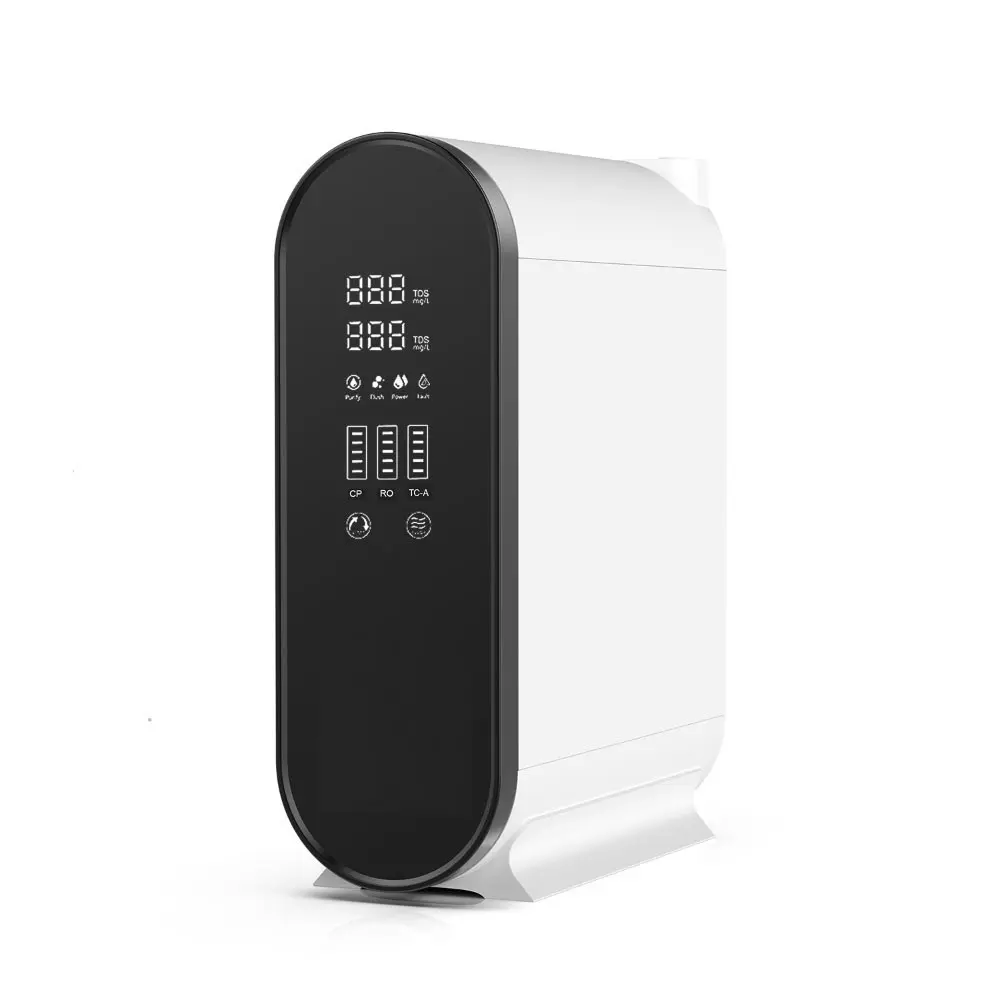
Frankly? For a family, the TR-800 ticks a lot of boxes at a gentler price. The TX600-A will appeal to those who want to follow the incoming water quality, figures in hand.
Maintenance: cartridges, not a headache
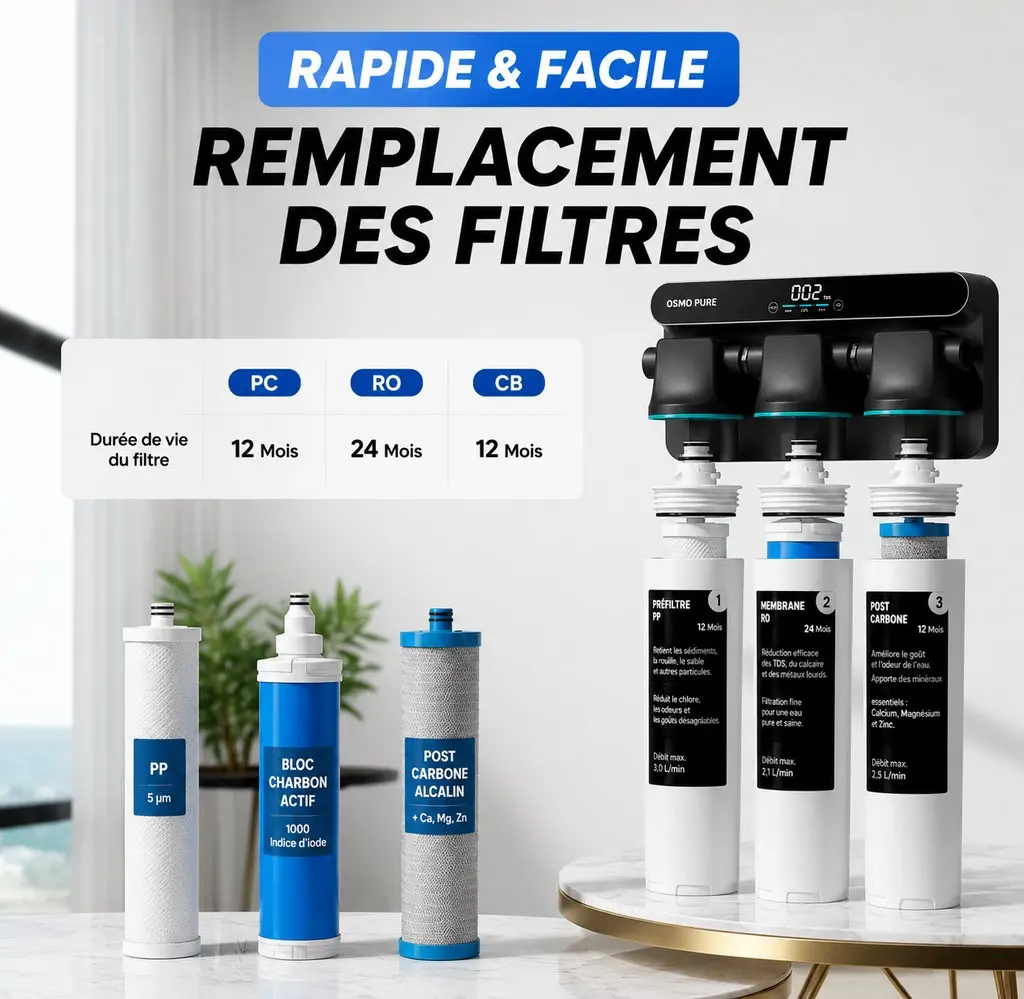
A reverse osmosis system is like a swimming pool: without maintenance, it ends badly. On both of these models, the cartridges are changed with a simple twist, without taking the unit apart. Indicative lifespans given on the product pages (they vary with the water and consumption):
- TR-800: pre-filter up to 12 months, membrane up to 24 months, post-filter up to 12 months;
- TX600-A: pre-filter about 6 months, post-filter about 12 months, membrane up to 24 months.
The cartridges are on sale in the shop and online:
| For the TR-800 | Price | For the TX600-A | Price |
|---|---|---|---|
| PP + coconut carbon pre-filter | €18 | PP + CTO pre-filter | €51 |
| RO 800 GPD membrane | €80 | RO 600 GPD membrane | €65 |
| Alkaline post-carbon | €28 | Carbon + alkaline | €44 |
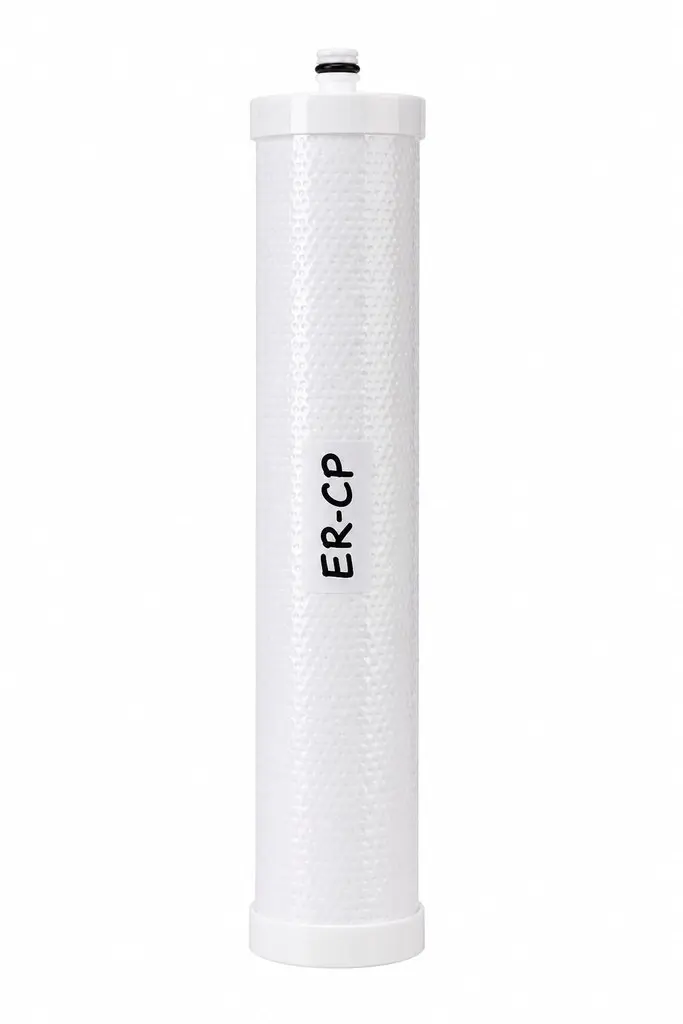
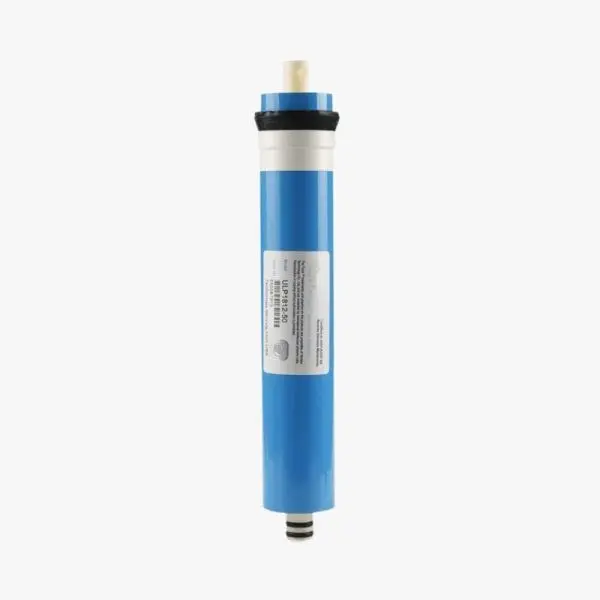
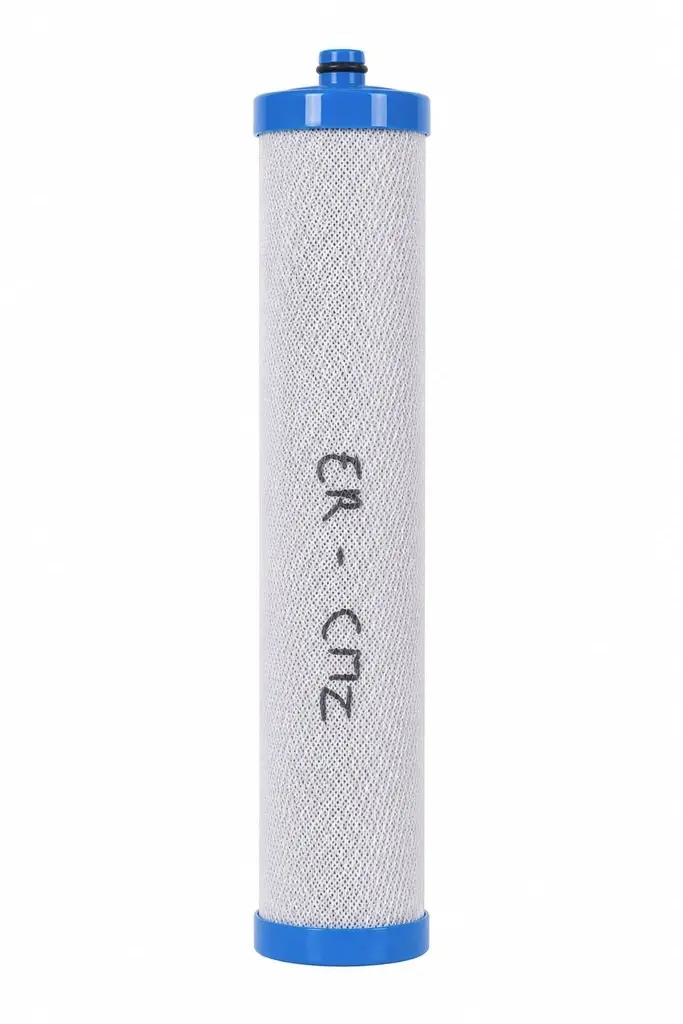
A quick back-of-the-envelope sum: on the TR-800, a full pre-filter + post-filter set comes to €46, and the membrane is generally added every two years. Compare that with a family's bottled-water budget over a year… and with your back.
FAQ
Does a reverse osmosis system make cistern water drinkable?
It should not be presented that way. A kitchen reverse osmosis system filters the water very finely at the drinking point, but cistern water must first be well maintained, often pre-filtered, and ideally tested. Come and see us with your situation, and we will guide you without selling you a dream.
Do you need a power outlet under the sink?
For the TR-800, no: its product page states operation without mains power. The TX600-A has a 48 W pump.
Is reverse-osmosis water “empty” of minerals?
On both of these models, a final cartridge remineralises the water after the membrane (calcium and magnesium in particular), for a more balanced taste.
Does it waste water?
Reverse osmosis always rejects some of the water. The product pages state 4:1 for the TR-800 and 2:1 for the TX600-A, much better than older systems.
Do you deliver the system?
Orders are collected free of charge at the shop, 59 route de l'Espérance in Grand Case. For customers in Saint Barthélemy, delivery is free as far as Galisbay harbour, and sales to Saint Barth are duty-free.
Come taste the difference (and leave the packs on the shelf)
The simplest option: come to Nawak Import, 59 route de l'Espérance in Grand Case. Tell us whether you are on the mains or on a cistern, show us a photo of your under-sink space, and we will help you choose between the TR-800 and the TX600-A. The full water treatment range is also online, with today's prices.
Read also
To your health — with filtered water, this time!
Come see us in Grand Case
Want to see the reverse osmosis systems in person, or talk to us about your setup (mains or cistern)? Visit Nawak Import at 59 route de l’Espérance, Grand Case. Free pickup in store. For Saint Barthélemy, delivery is free to Galisbay harbor, and sales to Saint Barth are duty-free.